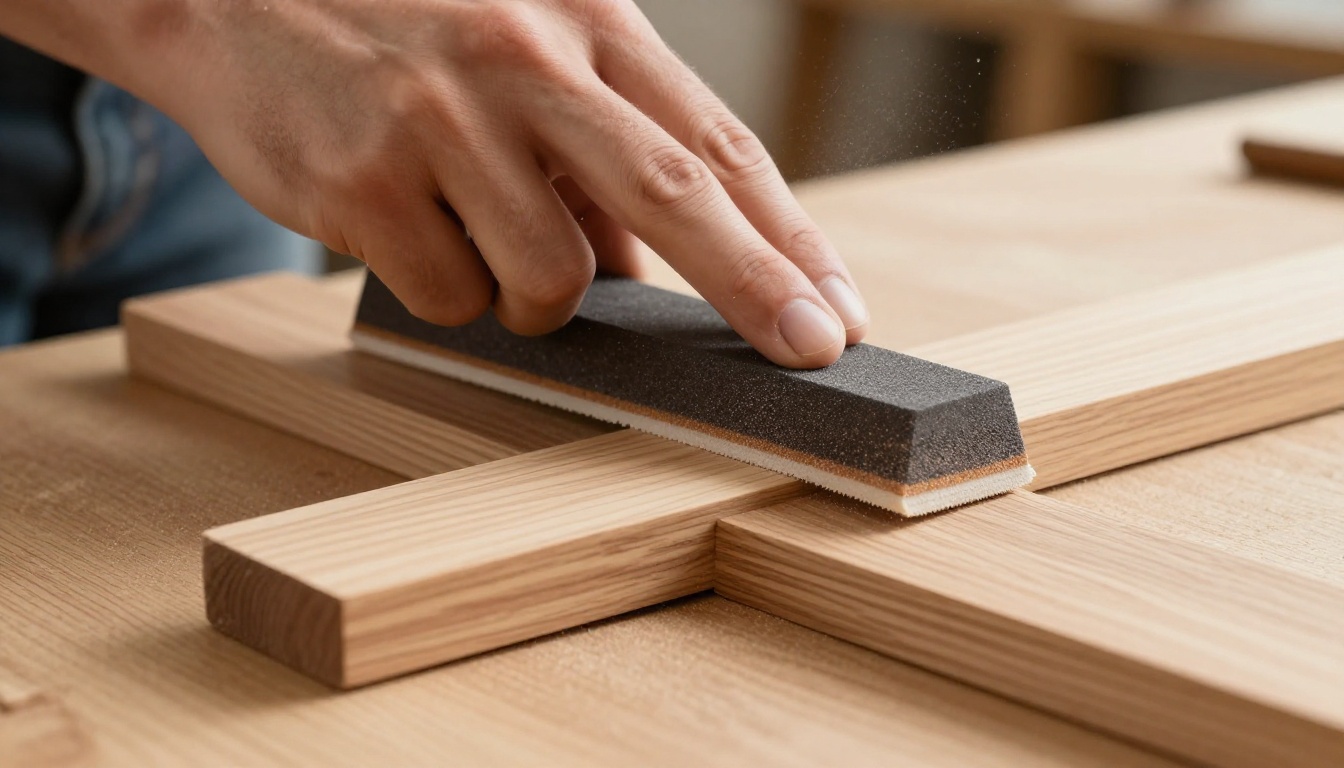
Picture this: a woodworker sands a table with 80-grit paper, skips ahead to 220, then paints. Hours later, faint scratches peek through the finish. He scrapes it all off and starts over. Sandpaper grits measure coarseness. Low numbers like 60 cut fast but rough. High numbers like 400 smooth like glass.
You save time and avoid rework when you progress grits right. Results look pro, ready for stain or paint. This guide covers grit basics, starting points, step sequences, and tips. Follow it, and your finishes turn heads.
Understand Sandpaper Grits to Sand Smarter, Not Harder
Grits range from coarse to ultra-fine. Numbers show particles per square inch. Lower numbers mean bigger grains and faster cuts. Higher numbers create smoother surfaces.
Coarse grits under 100 remove stock quick. Medium ones from 120 to 220 level bumps. Fine grits at 320 to 400 prep for stains. Ultra-fine above 600 polish to shine.
Progress matters because each step erases prior scratches. Skip one, and marks show under light or finish. Think of it like stairs: each finer grit climbs to smooth.
Here’s a quick grit guide:
| Grit Range | Use | Surface After |
|---|---|---|
| 40-100 | Heavy removal, shaping | Rough scratches |
| 120-220 | Leveling, smoothing | Even but visible lines |
| 320-400 | Pre-stain or paint prep | Very smooth |
| 600+ | Polishing, wet sanding | Glass-like sheen |
This table helps pick fast. For more on grit charts, check this Fine Woodworking grit guide.
Coarse Grits for Fast Material Removal
Grits from 40 to 80 tackle tough jobs. They strip old varnish fast. Shape edges on rough lumber. Smooth barn wood or remove rust from metal.
These leave deep scratches. You must follow with finer paper. For example, start with 60-grit on twisted boards. It flattens high spots in minutes.
Yet, go easy. Heavy pressure digs gouges. Test on scrap first.

Fine and Ultra-Fine Grits for That Final Sheen
Start fine grits at 220. They prep wood for paint. Use 320 to 400 before stain. The wood drinks finish even.
Ultra-fine from 600 to 2000 works wet. It cuts dust and shines auto parts or furniture. Clogs happen if you skip coarse steps. Grains gum up fast.
In short, save fine paper for last. Results gleam.
Pick the Perfect Starting Grit for Your Project
Assess your surface first. Feel it with your hand. Bumpy means coarse start. Smooth skips to medium.
Wood takes coarser grits. Metal needs finer to dodge gouges. Plastic stays gentle. Power tools let you begin rougher because they even pressure.
Factors count too. Hand sanding starts finer than random-orbit machines.
| Surface Condition | Start Grit | Material Example |
|---|---|---|
| Very rough/damaged | 60-80 | Rough lumber, old finish |
| Fairly even | 120-150 | Planed wood, light scratches |
| Almost smooth | 180+ | Jointed surfaces, filler |
Use this chart to decide quick.
Starting Grits for Woodworking Projects
Wood responds well to 80-grit on rough boards. It removes saw marks fast. Jointed surfaces start at 120. They need less stock gone.
Flatten a tabletop? Begin at 80. Plane a panel? Jump to 120. Always check flatness with a straightedge after.
This saves hours later.
Best Starters for Metal, Plastic, and Paint Prep
Metal avoids deep scratches, so start 120 to 180. Orbital sanders handle 80 safe on steel.
Plastic demands 220 or higher. It melts under coarse paper. Paint removal uses 80 to 120. Scrape first, then sand.
Test a spot always. Adjust based on results. See this metal sanding guide from Popular Mechanics for details.
Follow This Step-by-Step Grit Progression for Flawless Results
Core rule: progress by roughly doubling grit numbers. Go 80 to 120, then 180, 220, 320, 400. No skips for best work.
Each step hides prior lines. Sand until scratches vanish. Dull paper? Swap it.
Shorten for paint: 120-220-320. Lengthen for polish: add 600 wet.
Change paper often. Inspect under light.
The Go-To Sequence for Wood Finishes
Full wood path starts at 80. Remove rough spots. Next, 120 levels it. Then 180 refines.
Hit 220 for stain prep. Finish with 320 or 400. A chair takes 10 to 20 minutes per grit.
Before: choppy surface. After: butter smooth. Patience pays.

Custom Progressions for Metal and Specialty Surfaces
Metal sequence: 120 to 220, then 400. Wet sand 600 for shine.
Auto body: 320 to 600 to 2000. Buff last.
Test small areas first. Adjust if needed. Works great on tools or frames.
Pro Techniques and Common Pitfalls to Nail Every Finish
Sand with the grain on wood. Circles work on metal. Use light pressure, 1 to 2 pounds max.
Vacuum between grits. No dust means no re-scratches.
Common traps: skip steps and see lines. Press hard for gouges. Reuse clogged paper wastes time.
Wet sand ultra-fine for zero dust. Soak paper first.
- Always follow grain direction.
- Check progress with raking light.
- Clean surface fully before next grit.
These fix most issues.
Sanding Direction, Pressure, and Speed Secrets
Grain direction prevents swirls. On metal, random orbits avoid rings. Keep pressure light. Let the paper cut.
Go slow for perfection. Rush, and scratches stay. Practice builds speed.
Tools and Dust Control for Cleaner, Faster Work
Sanding blocks keep flats even. Flexible pads hit curves. Random orbital speeds jobs.
Shop vac hooks up best. Tack cloths wipe residue. Dust harms lungs too, so mask up.
Beyond basics, try this dust collection tip sheet from Wood Magazine.

Master grits, start smart, progress steady, and apply pro tips. Your next project shines pro.
Grab a grit assortment today. Test on scrap wood. Share your results in comments. Check best sanders next for even faster work. You got this.