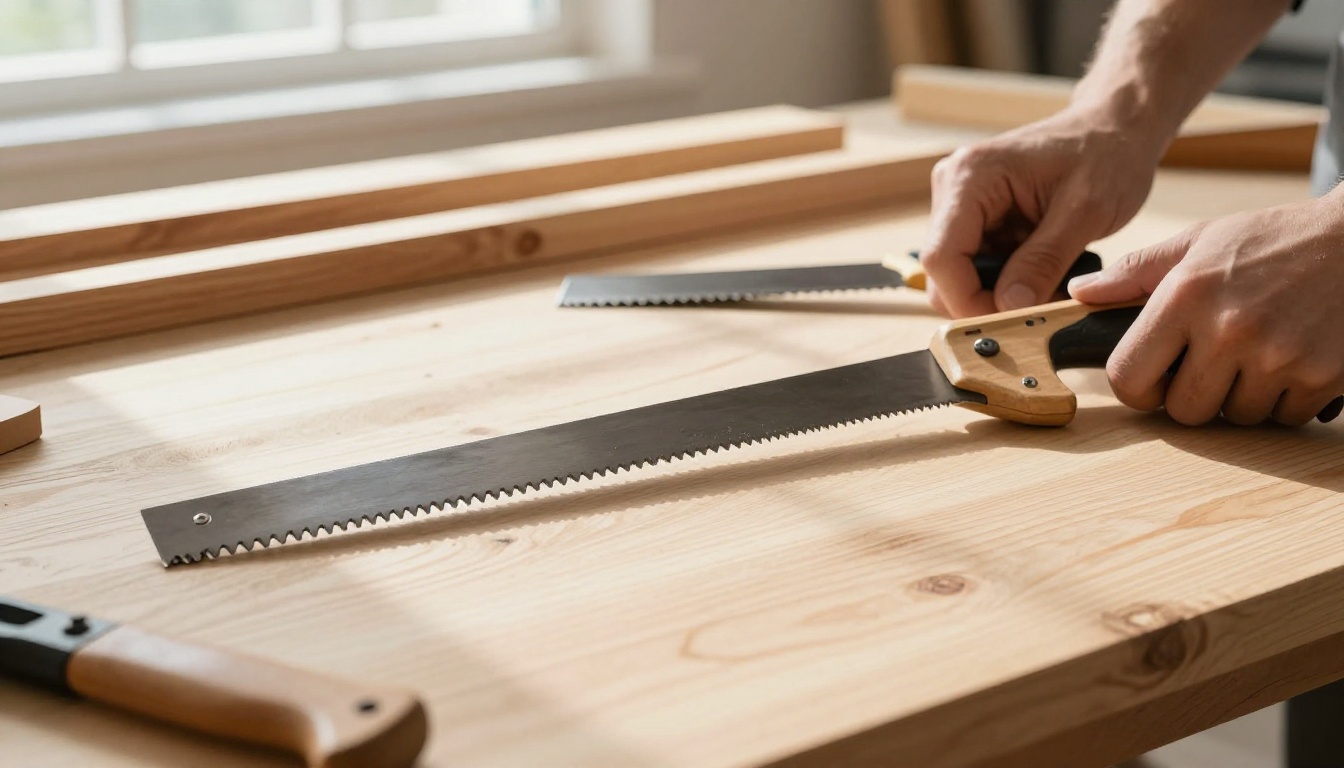
Picture this. You head to the garage full of excitement to build a simple shelf. But your old handsaw binds halfway through the wood. Splinters fly everywhere. The board warps. Hours later, you quit in frustration.
That mess happens to many first-timers. The wrong saw turns easy jobs into nightmares. Handsaws come in many styles. Pick the right one, and you slice through wood, metal, or branches with clean, quick strokes. No more stuck blades or ragged edges.
This guide breaks it down for beginners. You’ll learn saw parts, how to match tools to cuts, smart buying tips, and ways to avoid pitfalls. By the end, you’ll shop with confidence. Your next project stays on track.
Master the Basics: Key Parts of Every Handsaw
Every handsaw has core parts that affect your cuts. Understand them first. Then you spot quality and pick what fits your needs.
The blade forms the backbone. Most use high-carbon steel. It flexes without snapping. Some have impulse-hardened tips for longer life. Blade length runs from 10 to 26 inches. Shorter ones work for tight spots. Longer blades handle thick stock faster.
Teeth do the cutting work. Count them with TPI, or teeth per inch. Low TPI rips wood quickly. High TPI leaves smooth finishes. Patterns matter too. Crosscut teeth angle for side-to-side slices. Rip teeth chisel straight ahead.
Handles provide control. Pistol grips suit push strokes. Straight handles fit pull saws. Rubber or wood covers prevent slips.
Tension mechanisms appear on frame saws. They keep blades taut for straight lines.
Here are the main parts in simple terms:
- Blade: Flexible steel strip with cutting teeth. Length sets reach; flexibility aids curves.
- Teeth: Zipper-like edges. TPI and shape decide speed versus finish.
- Handle: Your grip point. Ergonomic designs reduce fatigue.
- Frame or back: Stiffens the blade on some models. Prevents wobbling.
Know these parts. You avoid cheap tools that bend or dull fast.
Blade Length and Flexibility: Size It Right for Your Project
Choose blade length by job size. A 10- to 12-inch blade covers most home tasks. It stores easy and starts cuts quick.
Longer 20- to 26-inch blades speed through framing lumber. But they tire your arm on small work. Short 6-inch blades excel in tight plywood edges.
Flexibility helps too. Thin blades bend for scroll cuts. Stiff ones stay true on rips. For example, a 14-inch flexible blade trims branches without snagging.
Match size to stock. Thick oak needs length. Delicate trim wants short and bendy.
Teeth Patterns: The Secret to Fast or Fine Cuts
Teeth patterns set cut type. Crosscut teeth slant at 45 degrees. They shear wood fibers across the grain. Perfect for boards or plywood.
Rip teeth stand straight and chisel-like. They split fibers along the grain. Use them on long lumber runs.
Combo teeth mix both. Great for general use. TPI guides finish. Four to six TPI removes wood fast but rough. Eight to 11 TPI smooths general cuts. Fourteen or more TPI works plastics or metal without gumming.
Stick to the pattern. A rip saw jams on crosscuts. Test on scrap first. For plywood shelves, grab a crosscut with 8-10 TPI.
Handle Designs: Grip That Feels Natural in Your Hand
Handles affect comfort and power. Pistol grips let you push hard. They suit Western push-style saws.
Straight handles fit Japanese pull saws. You pull toward you for control. Both reduce blisters.
Rubberized or hardwood grips fight sweat. Pick one that feels like shaking hands. Test in store. Curl your fingers around it. Does it fill your palm?
Good grips cut fatigue by half. Your strokes stay steady longer. For details on popular models, check Family Handyman’s handsaw review.
Match Your Handsaw to the Cut: No More Wrong Tool Blues
Nothing frustrates like a mismatched saw. Wood splinters. Metal gums up. Match the tool to the task. You’ll get clean results every time.
Common jobs need specific saws. Beginners start with versatile picks. Then branch out.
Here’s a quick comparison table for popular cuts:
| Cut Type | Best Saw Type | Why It Works | Beginner Pick |
|---|---|---|---|
| Wood Crosscut | Panel or crosscut | 8-10 TPI, angled teeth slice clean | Yes |
| Wood Rip | Rip saw | 3-5 TPI, straight teeth split fibers | Sometimes |
| Curves | Coping saw | Thin, flexible blade turns tight | Yes |
| Metal/PVC | Hacksaw | 24-32 TPI, high tension | Yes |
| Pruning | Bowsaw or folding | Coarse 3 TPI for green wood | Yes |
This table shows starters. Universal saws handle most wood jobs.
Crosscuts on Wood: Smooth Ends for Frames and Shelves
Crosscuts chop across grain. Think frame ends or shelf boards. A panel saw with 8-10 TPI shines here.
Angled teeth slice fibers without tear-out. Cut 2x4s for a bench. Mark your line. Start shallow. Let the saw pull through.
These saws store flat. They beat power tools for straight edges.
Rip Cuts Through Wood: Power Through Long Splits
Rip cuts follow the grain. Dimensional lumber like 2x10s need them. Spot a rip saw with 3-5 TPI.
Large, straight teeth plow forward. They remove stock fast. Contrast that with crosscuts. Rip teeth bind sideways.
Use for shed floors. Clamp your board. Steady pulls yield straight splits.
Curves and Intricate Shapes: Coping Saws Shine Here
Curves demand thin blades. Coping saws use U-frames with pinned blades. They turn on dimes for dovetails or scrollwork.
Swap pins for blade angle. Pair with keyhole saws for starter holes. Practice on pine. You’ll shape ornaments easy.
Metal and PVC: Hacksaws Handle Tough Materials
Hacksaws tackle pipe and angle iron. Fine 24-32 TPI teeth bite metal. Tension frames keep blades taut.
Bi-metal blades flex without breaking. For PVC, go slow to skip melting. Lubricate with wax. Secure in a vise.
See This Old House’s hacksaw tips for more.
Outdoor Pruning: Bowsaws and Folding Saws for Branches
Prune limbs with bowsaws. Curved blades and 3 TPI teeth chew green wood. Deep frames clear thick branches.
Folding saws pack small. Japanese pull styles leave flush cuts. Carry one for trail work. Coarse teeth stay sharp in sap.
Shop Smart: Features That Make a Handsaw Beginner-Friendly
Buying overwhelms newbies. Focus on key features. Skip junk that dulls after one job.
Budget saws run $10 to $50. Stanley and Irwin offer solid value. Silky excels in pull saws. Look for rust-proof coatings and sharp-out-of-box teeth.
Replaceable blades extend life. Eco-handles from recycled plastic trend in 2026.
Test heft in hand. Even teeth mean quality.
Teeth Per Inch (TPI): Pick Your Cut Speed and Smoothness
TPI balances speed and finish. Low 3-6 TPI rips aggressive and rough. High 14+ TPI polishes fine.
Hybrids at 6-8 TPI suit beginners. They crosscut and rip okay. Check Popular Mechanics’ TPI guide.
Quality vs Cost: Balance Durability and Your Wallet
Quality shows in details. Sharp teeth, tight rivets, flex without flop. Budget picks under $20 last years.
Cheap imports bend and dull. Pay $25 for Stanley. It outperforms twice the price in tests.
Comfort and Extras: What Sets Great Saws Apart
Ergo handles cut vibes. Blade guards protect tips. Pull strokes need less force than push.
Lifetime warranties seal deals. Irwin’s FatMax line fits big hands well.
Succeed from Stroke One: Tips, Maintenance, and Pitfalls
Skills build fast with good habits. Safety leads. Then maintain for sharp cuts.
Start slow. Let the saw work. Relax your grip.
Essential Safety Habits Every Beginner Needs
Wear eye protection and gloves. Secure workpieces. No loose sleeves near blades.
Stable stance prevents slips. Cut away from your body.
Keep It Sharp: Simple Maintenance for Peak Performance
File teeth every five uses. Clean sap with oil. Store dry to fight rust.
Replace blades at first warp. A $5 swap beats new saws.
Top Mistakes That Ruin Cuts and How to Dodge Them
Don’t force dull blades. They wander and bind. Sharpen instead.
Skip rip saws on crosscuts. Splinters result. Match patterns.
Bad posture tires you. Stand square. Use full strokes.
Right habits yield pro results quick. Practice on scrap.
You now grasp handsaw basics. Know the parts. Match to your cut. Buy quality. Maintain sharp.
Assess your next project. Shelf? Grab a crosscut panel saw. Branches? Folding pruner.
What’s your first pick? Comment below with your saw choice or tough cut story. Share pics of your work. Subscribe for more tool guides. Build that toolbox. Your projects deserve clean cuts.